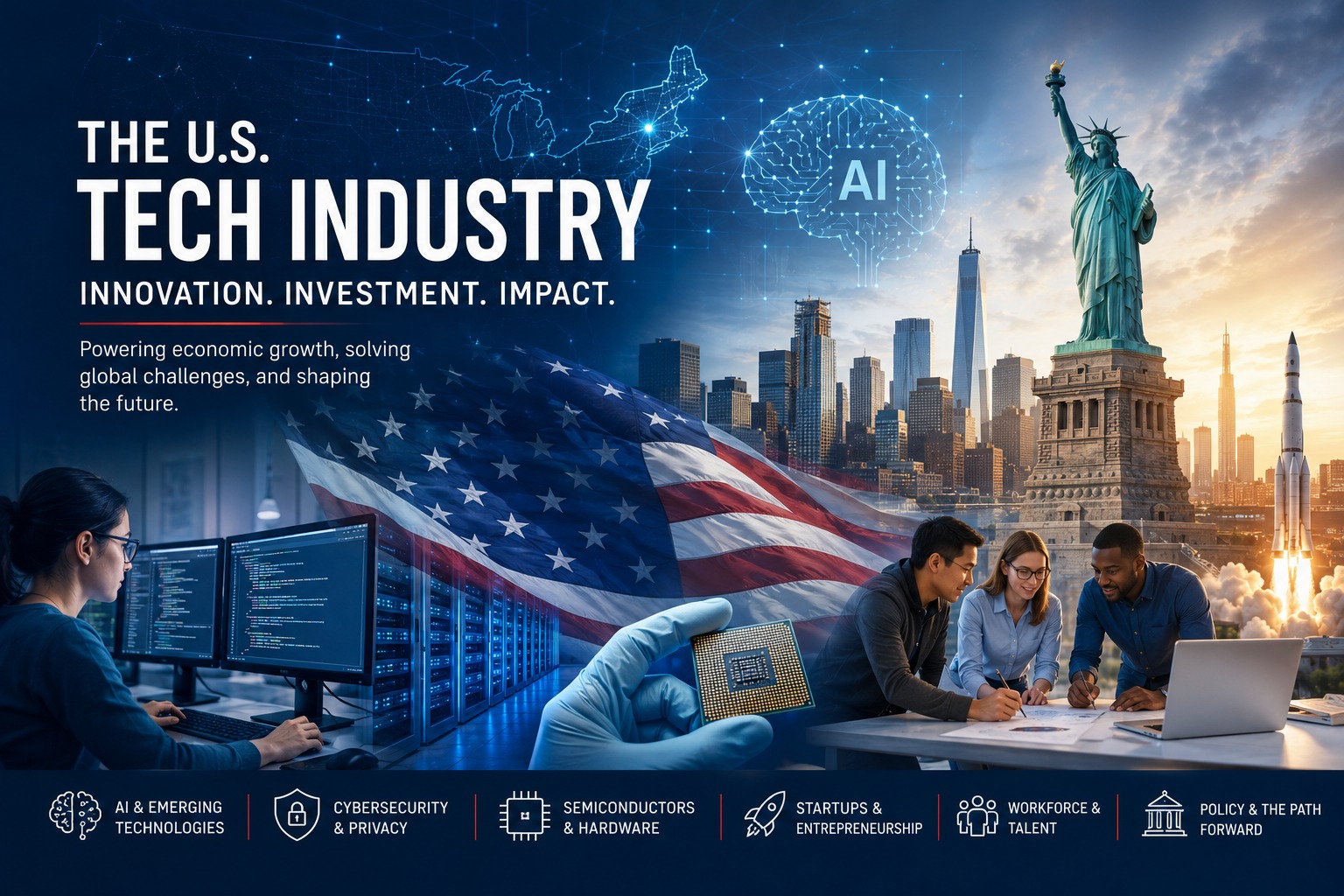
The United States technology industry remains one of the most influential economic forces in the world. From artificial intelligence and cloud computing to cybersecurity and semiconductor manufacturing, the sector continues to shape how businesses operate, how consumers interact, and how governments respond to rapid digital transformation. In 2026, the American tech industry stands at a critical crossroads—balancing innovation, regulation, global competition, and workforce evolution.
The Backbone of the American Economy
The technology sector contributes trillions of dollars to the U.S. economy every year. Major technology hubs such as Silicon Valley, Seattle, Austin, Boston, and New York continue to attract entrepreneurs, investors, and highly skilled professionals from around the world. Companies across industries now depend heavily on digital infrastructure, making technology not only a standalone sector but also the foundation of modern business operations.
The growth of software-as-a-service (SaaS), e-commerce platforms, cloud computing, and enterprise automation has enabled companies to improve efficiency and scale rapidly. At the same time, startups continue to disrupt traditional industries through innovation in finance, healthcare, education, transportation, and entertainment.
Artificial Intelligence Leads the Next Wave
Artificial intelligence (AI) has become the defining technology trend in the United States. Businesses are integrating AI into customer service, data analytics, marketing, logistics, healthcare diagnostics, and software development. Generative AI tools are transforming how content is created, how developers write code, and how organizations automate repetitive tasks.
Major American technology companies are investing billions of dollars into AI infrastructure, including data centers, machine learning chips, and advanced language models. The race to dominate AI development has intensified competition among established firms and startups alike.
However, the rapid rise of AI has also sparked debates around privacy, misinformation, job displacement, and ethical responsibility. Policymakers are increasingly discussing regulations to ensure transparency, accountability, and responsible use of artificial intelligence technologies.
The Semiconductor Race
The semiconductor industry has become strategically important for the United States. Chips power everything from smartphones and electric vehicles to military systems and AI applications. In recent years, supply chain disruptions highlighted the risks of relying heavily on overseas manufacturing.
As a result, the U.S. government and private companies have invested heavily in domestic semiconductor production. New manufacturing facilities are being developed across states such as Arizona, Texas, and Ohio. The goal is to strengthen national security, reduce supply chain vulnerabilities, and compete more effectively with global manufacturing leaders.
The semiconductor push has also created thousands of jobs in engineering, manufacturing, and research while encouraging universities and technical institutions to expand STEM education programs.
Cybersecurity Becomes a National Priority
As digital systems become more integrated into daily life, cybersecurity has emerged as one of the most critical challenges facing the United States. Businesses, hospitals, financial institutions, and government agencies are increasingly targeted by cyberattacks, ransomware, and data breaches.
In response, companies are investing more in cybersecurity tools, cloud security systems, and threat intelligence platforms. Demand for cybersecurity professionals has surged, creating strong career opportunities in ethical hacking, network security, and digital forensics.
The federal government has also increased collaboration with private technology companies to strengthen national cyber defenses and improve infrastructure resilience.
The Changing Workforce
The American tech workforce is undergoing significant transformation. Remote and hybrid work models, accelerated during the pandemic years, remain common across much of the industry. Companies are focusing on flexibility, employee wellness, and global talent recruitment.
At the same time, automation and AI are changing job requirements. Technical skills such as machine learning, cloud engineering, data science, and cybersecurity are in high demand. Non-technical professionals are also expected to adapt to digital tools and AI-driven workflows.
Despite high salaries and strong growth opportunities, the industry faces ongoing challenges related to layoffs, workforce restructuring, and concerns about work-life balance. Many professionals are prioritizing career stability, continuous learning, and mental health support.
Startups and Venture Capital
The United States continues to lead the global startup ecosystem. Venture capital investment remains strong in sectors such as artificial intelligence, climate technology, biotechnology, robotics, and fintech.
Cities beyond Silicon Valley are also emerging as major innovation centers. Austin, Miami, Denver, Atlanta, and Raleigh are attracting startups due to lower operational costs, favorable business environments, and growing talent pools.
American universities and research institutions continue to play a major role in driving innovation by supporting entrepreneurship and technology commercialization.
Regulation and Antitrust Pressure
As technology companies become more powerful, regulators are increasing scrutiny over market dominance, consumer privacy, and data practices. Antitrust investigations and legal battles involving large technology firms have become more common.
Lawmakers are debating how to balance innovation with fair competition and consumer protection. Issues such as social media influence, algorithm transparency, digital advertising, and app marketplace control remain central topics in policy discussions.
Technology leaders argue that excessive regulation could slow innovation, while critics believe stronger oversight is necessary to protect consumers and maintain competitive markets.
Sustainability and Green Technology
Environmental sustainability is becoming a key focus within the tech industry. Data centers consume enormous amounts of energy, pushing companies to invest in renewable energy sources and energy-efficient infrastructure.
Technology firms are also developing solutions for climate monitoring, electric mobility, smart grids, and carbon reduction. Green technology innovation is expected to become one of the fastest-growing sectors in the coming decade.
Consumers and investors are increasingly evaluating companies based on environmental, social, and governance (ESG) commitments, encouraging businesses to adopt more sustainable practices.
The Future of the U.S. Tech Industry
The future of the American technology industry will likely be shaped by artificial intelligence, advanced computing, clean energy innovation, and digital connectivity. The United States remains a global leader in research, entrepreneurship, and technological advancement, but competition from other countries continues to intensify.
To maintain leadership, the country will need continued investment in education, infrastructure, research, and workforce development. Collaboration between government, universities, and private companies will play a crucial role in driving long-term innovation.
While challenges such as regulation, cybersecurity threats, and economic uncertainty remain, the U.S. tech industry continues to demonstrate resilience and adaptability. As technology becomes increasingly central to everyday life, the sector’s influence on society, business, and global politics will only continue to grow.
Conclusion
The United States technology industry is more than a driver of economic growth—it is a catalyst for global innovation and social change. From artificial intelligence breakthroughs to cybersecurity advancements and sustainable technology solutions, the sector continues to redefine the future.
As businesses and consumers navigate an increasingly digital world, the ability of the American tech industry to innovate responsibly and inclusively will determine not only its economic success but also its broader impact on society in the years ahead.