Introduction
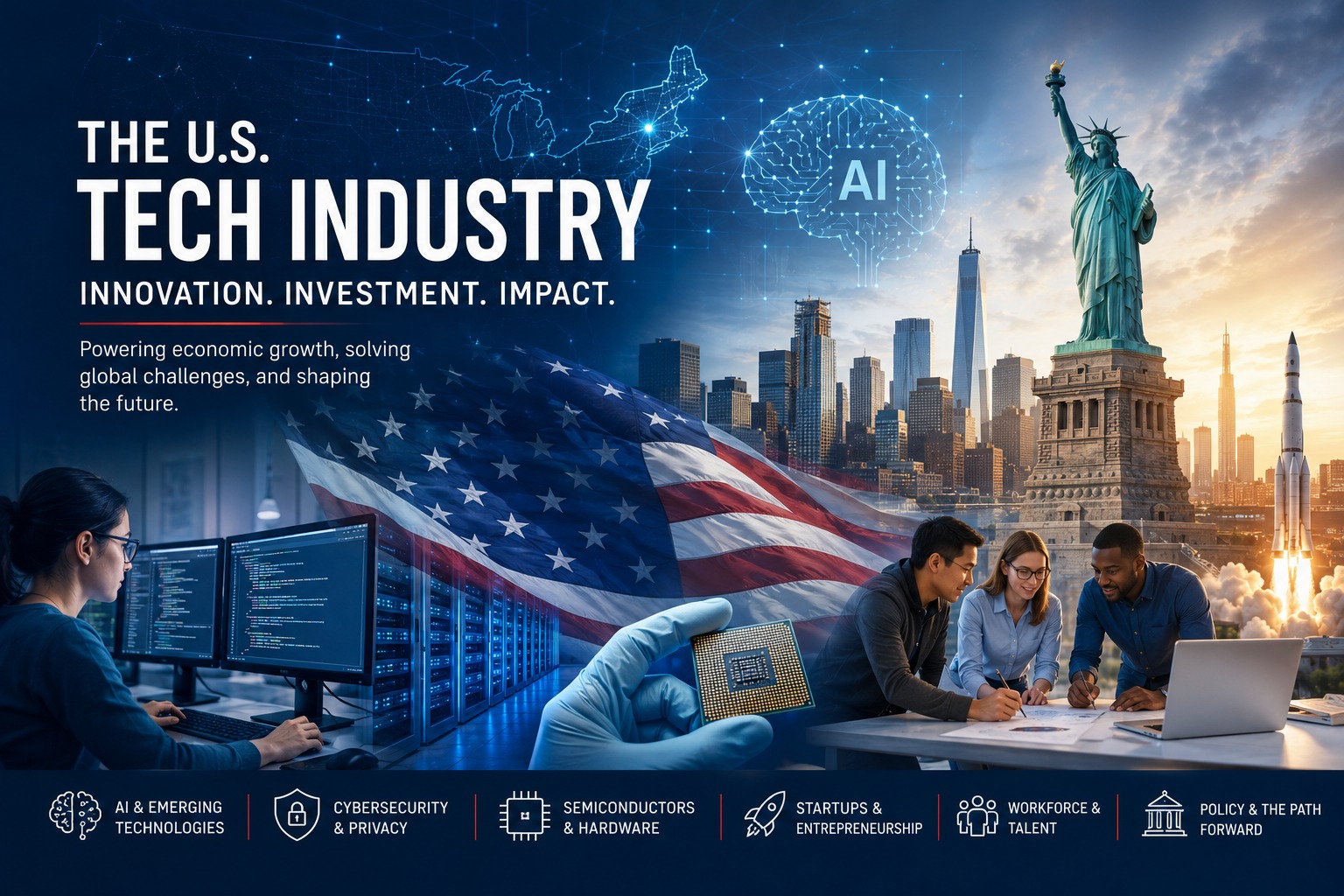
Artificial Intelligence (AI) is transforming industries across the United States faster than ever before. From healthcare and finance to manufacturing and customer service, AI-powered tools are changing how businesses operate and how employees work. While some Americans fear job losses due to automation, others see AI as an opportunity to create new careers, improve productivity, and boost economic growth.
In this article, we will explore how AI affects American jobs, which industries are most impacted, the benefits and challenges of AI in the workplace, and what the future of work may look like in America.
What Is Artificial Intelligence?
Artificial Intelligence refers to computer systems that can perform tasks that normally require human intelligence. These tasks include:
- Learning from data
- Understanding language
- Solving problems
- Recognizing images and speech
- Making decisions
Popular AI technologies include machine learning, chatbots, robotics, and generative AI tools like virtual assistants and content generators.
How AI Is Changing American Jobs
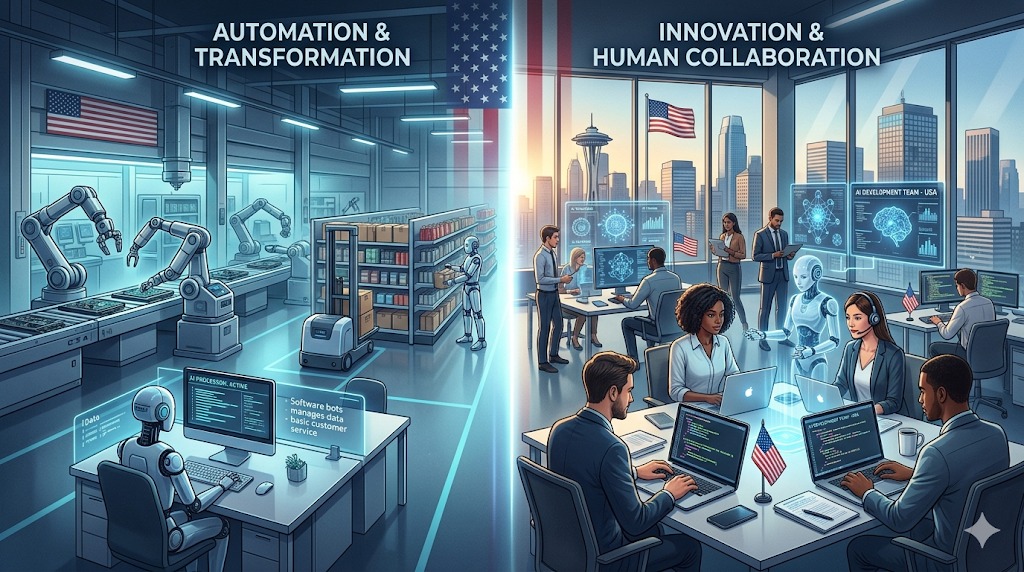
AI is reshaping the American workforce in several important ways. Some jobs are being automated, while others are evolving to require new skills.
1. Automation of Repetitive Tasks
AI systems can perform repetitive and routine tasks faster and more accurately than humans. This affects jobs in:
- Manufacturing
- Data entry
- Customer support
- Retail checkout services
- Transportation
For example, factories now use AI-powered robots to assemble products, reducing the need for manual labor.
2. Creation of New Job Opportunities
Although AI replaces some roles, it also creates new jobs in areas such as:
- AI development
- Data science
- Cybersecurity
- Machine learning engineering
- AI ethics and compliance
Companies need skilled workers to build, manage, and monitor AI systems.
3. Increased Workplace Productivity
AI tools help employees complete tasks more efficiently. Workers can use AI for:
- Writing reports
- Analyzing data
- Automating emails
- Managing schedules
- Improving customer service
This allows employees to focus on creative and strategic work instead of repetitive tasks.
Industries Most Affected by AI in America
Healthcare
AI helps doctors diagnose diseases, analyze medical scans, and improve patient care. While AI supports healthcare professionals, it is unlikely to fully replace doctors or nurses.
Manufacturing
American factories increasingly use robotics and automation to improve production speed and reduce costs.
Finance
Banks and financial institutions use AI for fraud detection, risk analysis, and customer support through AI chatbots.
Transportation
Self-driving technology and AI logistics systems are changing trucking, delivery, and transportation industries.
Retail
Retail businesses use AI for inventory management, personalized recommendations, and automated checkout systems.
Positive Effects of AI on American Jobs
Higher Efficiency
AI helps companies operate faster and reduce human error.
Economic Growth
AI innovation contributes to economic development and global competitiveness for the United States.
Better Work-Life Balance
Automation can reduce repetitive workloads, giving employees more time for meaningful tasks.
Demand for Skilled Workers
AI increases demand for tech professionals, creating high-paying career opportunities.
Negative Effects of AI on American Jobs
Job Displacement
Workers performing repetitive tasks face the highest risk of replacement by AI systems.
Skills Gap
Many employees need retraining to adapt to AI-driven workplaces.
Income Inequality
High-skilled workers may benefit more from AI than low-skilled workers, increasing wage inequality.
Job Uncertainty
Rapid technological changes can create fear and instability in the labor market.
The Future of AI and Employment in America
The future of American jobs will likely involve collaboration between humans and AI rather than complete replacement. Experts believe that:
- AI will automate tasks, not entire professions
- Human creativity and emotional intelligence will remain valuable
- Lifelong learning will become essential
- Remote and digital work opportunities will continue growing
Workers who adapt to AI technologies and develop digital skills will have stronger career prospects in the future economy.
How Americans Can Prepare for the AI Era
To stay competitive in an AI-driven job market, workers should:
Learn New Skills
Focus on skills such as:
- Data analysis
- Programming
- Communication
- Problem-solving
- Digital literacy
Embrace Lifelong Learning
Online courses, certifications, and technical training can help workers adapt to changing industries.
Develop Human-Centered Skills
Creativity, leadership, empathy, and critical thinking are difficult for AI to replace.
Conclusion
Artificial Intelligence is significantly affecting American jobs and transforming the future of work in the United States. While AI may replace certain repetitive tasks, it also creates new opportunities, improves productivity, and drives innovation. The key challenge for American workers is adapting to technological change through education and skill development.
Rather than fearing AI, businesses and employees can work together to use AI as a tool for growth, efficiency, and economic progress. The future of American employment will depend on how effectively society prepares for the AI revolution.