




The “State vs. Federal” AI Regulatory War
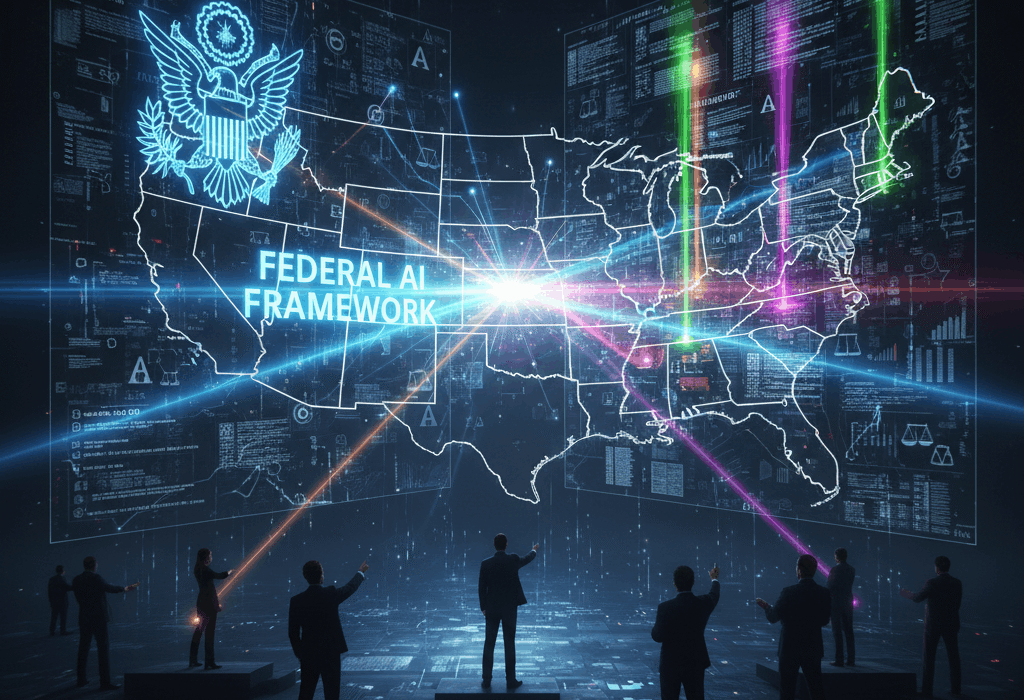
The rapid advancement of artificial intelligence has sparked a crucial debate regarding its regulation, leading to an emerging “war” between state and federal approaches in the United States. As AI becomes more ubiquitous, touching upon everything from autonomous vehicles to personal data, the question of who should set the rules and standards is becoming increasingly complex. This regulatory friction highlights the challenges of governing a fast-evolving technology with far-reaching implications. AI governance
At the federal level, discussions often center on broad frameworks that could apply nationwide, aiming for consistency and preventing a patchwork of conflicting regulations. Agencies like the National Institute of Standards and Technology (NIST) are working on voluntary frameworks and guidelines for trustworthy AI, while legislative proposals occasionally surface in Congress. The goal is often to establish foundational principles for responsible AI, addressing concerns like bias, transparency, accountability, and privacy. However, the slow pace of federal legislation, often hampered by political gridlock and the need to achieve consensus across diverse interests, struggles to keep up with the rapid development and deployment of new AI technologies.
Conversely, individual states are not waiting for federal action. Motivated by specific local concerns, consumer protection, or a desire to foster innovation within their borders, states are increasingly taking the initiative to enact their own AI-related laws. For instance, some states are exploring regulations around the use of AI in hiring processes to prevent discrimination, while others are focusing on AI ethics in public services or the deployment of facial recognition technology. This decentralized approach allows for more nimble responses to immediate issues and tailored solutions that reflect local priorities and values. However, it also raises the specter of a fragmented regulatory landscape.
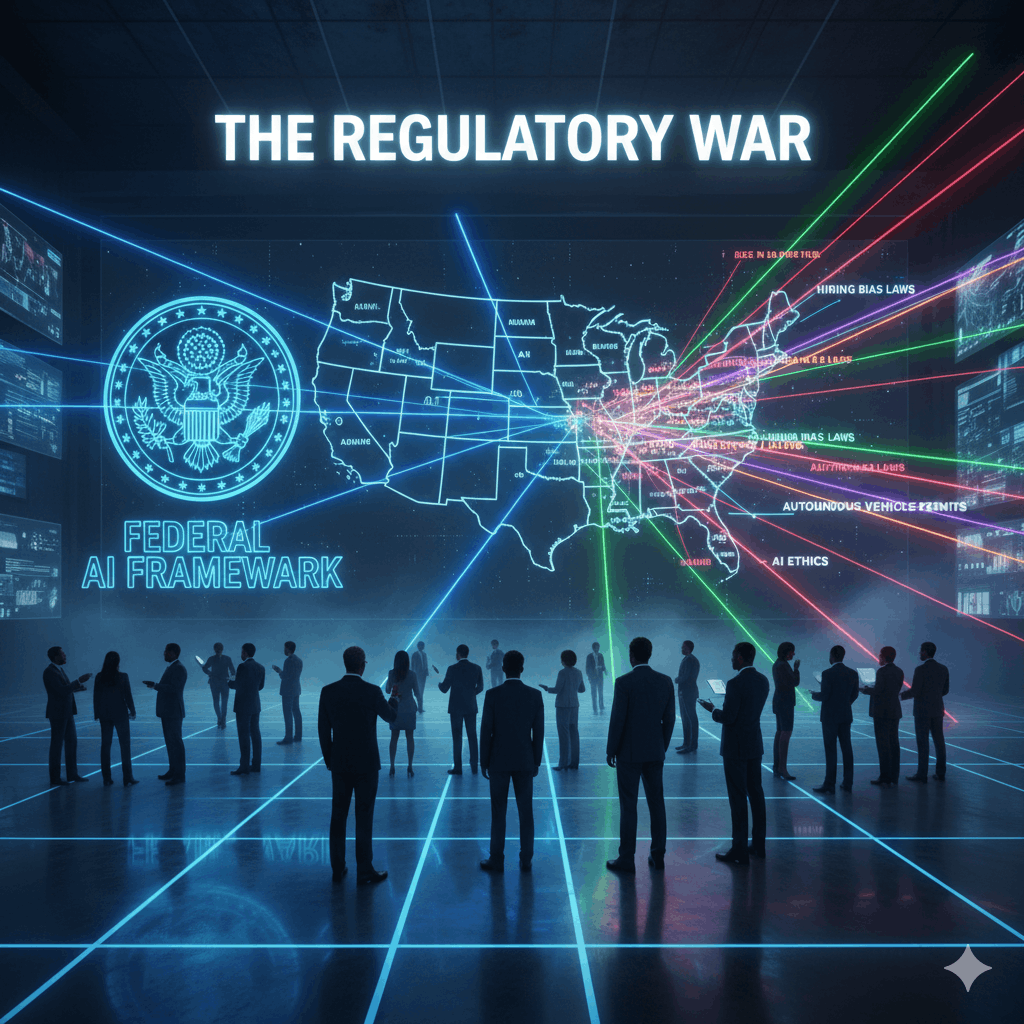
his emerging “regulatory war” presents both opportunities and significant challenges. On one hand, state-level experimentation can provide valuable insights and test different regulatory models, potentially leading to more effective and adaptable solutions. On the other hand, a lack of national uniformity can create compliance nightmares for businesses operating across state lines, stifle innovation due to uncertainty, and potentially disadvantage certain states. Companies developing AI solutions might face a labyrinth of differing rules, increasing operational costs and slowing down deployment.
The path forward likely involves a delicate balance. While states will continue to play a vital role in addressing localized concerns, a greater degree of federal coordination, perhaps through national standards or minimum requirements, could help streamline the regulatory environment. Collaborative efforts between federal and state governments, along with input from industry experts and civil society, will be crucial in forging a coherent and effective AI regulatory framework that fosters innovation while safeguarding public interests. The outcome of this “war” will ultimately shape the future of AI development and its societal impact in the United States.