



How to Use AI: A Step-by-Step Guide to Tools, Prompts, and Automation
In 2026, Artificial Intelligence has shifted from being a futuristic novelty to a fundamental utility, much like electricity or the internet. Whether you are a creative professional, a software developer, or a student, knowing how to use AI effectively is no longer optional—it is a core competency.
This guide provides a deep dive into the practical application of AI, from mastering the art of the prompt to integrating automated workflows into your daily life.
In 2026, Artificial Intelligence has shifted from being a futuristic novelty to a fundamental utility, much like electricity or the internet. Whether you are a creative professional, a software developer, or a student, knowing how to use AI effectively is no longer optional—it is a core competency.
This guide provides a deep dive into the practical application of AI, from mastering the art of the prompt to integrating automated workflows into your daily life.
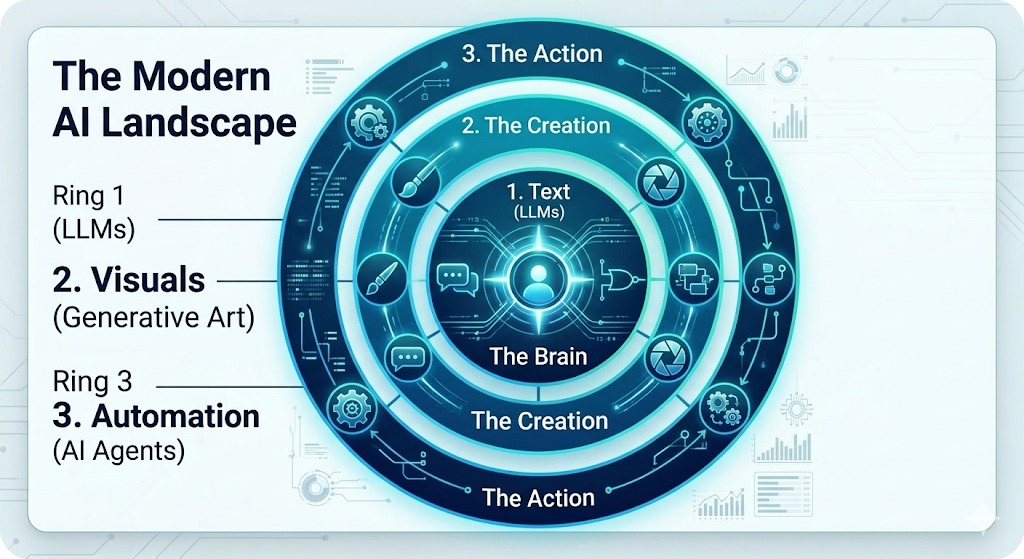
1. Understanding the Modern AI Landscape
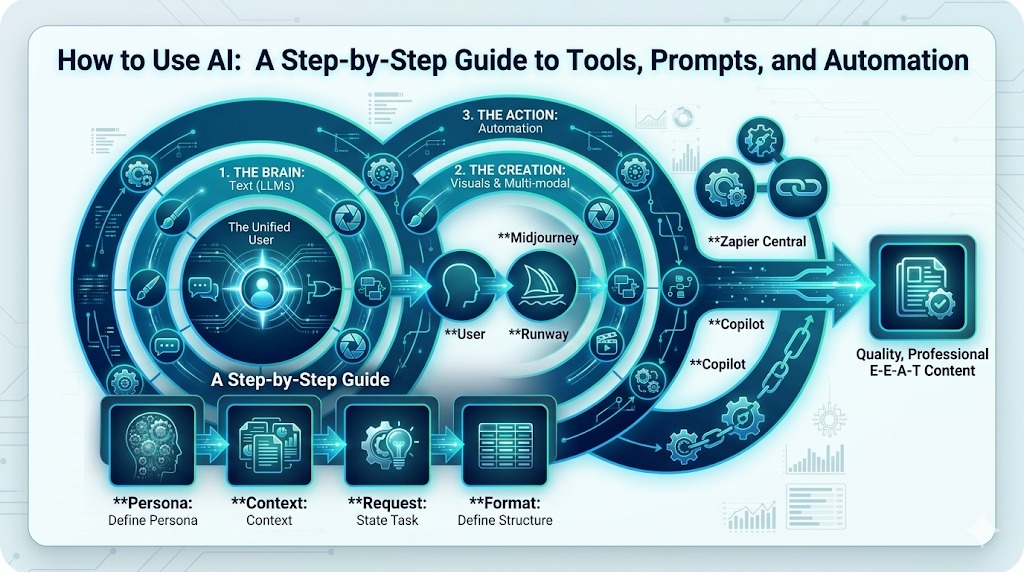
To use AI effectively, you must first understand the “Big Three” modalities that dominate the current market: Text (LLMs), Visuals (Generative Art), and Automation (AI Agents).
- Large Language Models (LLMs): Tools like ChatGPT, Claude, and Gemini are the “brains.” They handle reasoning, summarizing, and drafting.
- Visual & Multimodal AI: Platforms like Midjourney, Adobe Firefly, and Runway Gen-3 transform text into high-fidelity images and video.
- AI Agents: These are the newest frontier—tools like Zapier Central or Microsoft Copilot that don’t just talk but actually do tasks across different apps.
The Power User Mindset
The most successful users in 2026 don’t treat AI like a search engine; they treat it like a highly capable intern. You wouldn’t ask an intern to “write a business plan” without giving them context, examples, and a goal. The same applies to AI.
2. Mastering Prompt Engineering
The quality of your output is directly proportional to the quality of your input. This is the heart of AI productivity.
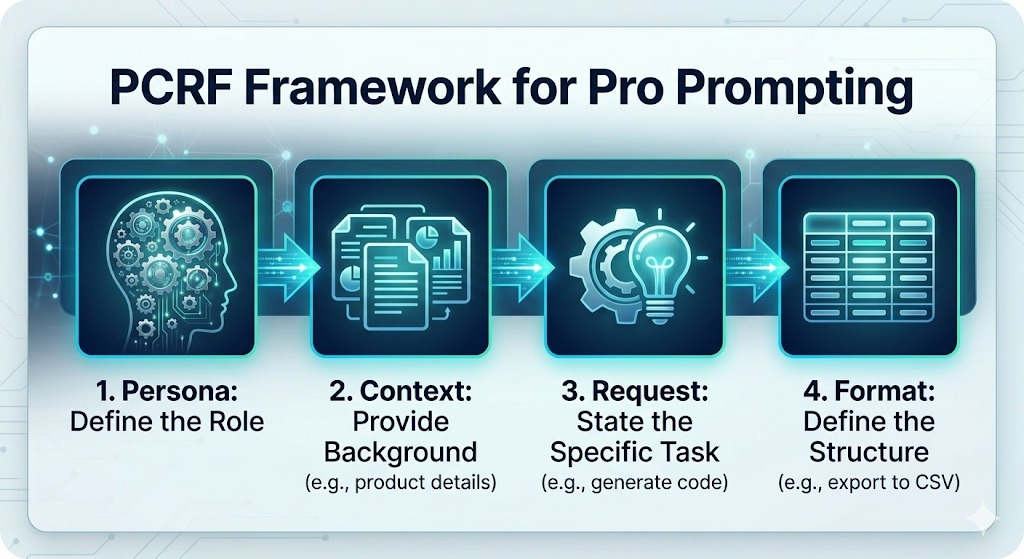
The PCRF Framework
To get professional-grade results, follow the PCRF structure:
- Persona: Assign the AI a role. (“You are a Senior SEO Strategist.”)
- Context: Provide the background. (“We are launching a sustainable footwear brand for urban commuters.”)
- Request: State the specific task. (“Write three variations of a 50-word Instagram caption.”)
- Format: Define the structure. (“Present them in a table with columns for ‘Caption’ and ‘Suggested Hashtags’.”)
Advanced Techniques
- Few-Shot Prompting: Give the AI 2-3 examples of your preferred style before asking for a result.
- Chain-of-Thought: Add the phrase “Think through this step-by-step” to improve the AI’s logic on complex tasks.
- Negative Prompting: Tell the AI what not to do. (“Avoid using corporate jargon or the word ‘synergy’.”)
3. Integrating AI into Professional Workflows
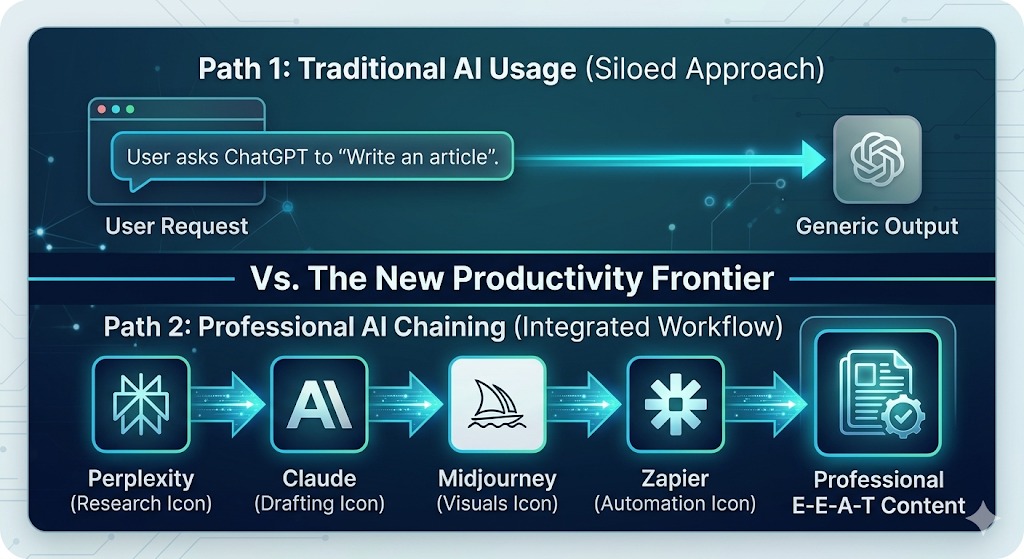
Using AI is about more than just a chat window. It’s about workflow automation.
AI for Content Creation and Marketing
AI can accelerate the production cycle by 10x. Start by using an LLM to generate a content pillar, then use a tool like Perplexity for deep research with cited sources. Finally, use Canva’s Magic Studio to generate the accompanying visuals.
SEO Keyword Integration: Mastering AI content creation and SEO optimization ensures your brand remains visible in an AI-saturated market.
AI for Data and Analysis
Modern spreadsheets now have AI built-in. You can ask Google Gemini or Microsoft Copilot to “Analyze these sales trends and identify the top three underperforming regions.” This moves you from manual data entry to strategic decision-making.
4. Ethical AI Usage and Best Practices
As we lean more on these tools, the responsibility of the user increases. Responsible AI usage is the hallmark of a professional.
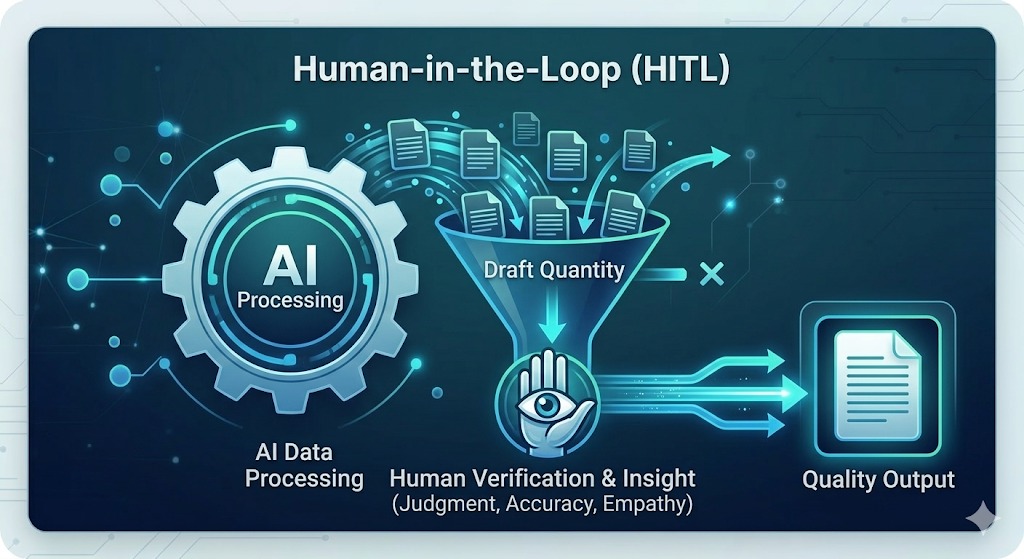
- The “Human-in-the-Loop” Rule: Never publish or ship AI-generated work without human review. AI can “hallucinate” (confidently state false facts).
- Privacy First: Avoid inputting sensitive personal data or proprietary company secrets into public AI models unless your organization has a private enterprise agreement.
- Bias Awareness: Be aware that AI can mirror the biases found in its training data. Always check for inclusivity and fairness in the output.
5. Top AI Tools for 2026
Depending on your needs, here are the leading tools to integrate into your stack:
| Category | Recommended Tools |
| General Purpose | ChatGPT (OpenAI), Claude (Anthropic), Gemini (Google) |
| Research | Perplexity AI, Consensus |
| Visual Design | Midjourney, Adobe Firefly, Kittl |
| Video Production | Runway, Sora, HeyGen |
| Coding | GitHub Copilot, Replit Ghostwriter, Cursor |
| Automation | Zapier, Make.com |
Frequently Asked Questions (FAQ)
1. Do I need to learn coding to use AI?
No. In 2026, Natural Language is the new “coding language.” While knowing Python helps for building AI systems, being a “Power User” only requires strong communication skills and an understanding of how to structure prompts.
2. Is AI-generated content bad for SEO?
Not necessarily. Google and other search engines prioritize E-E-A-T (Experience, Expertise, Authoritativeness, and Trustworthiness). If you use AI to draft content but add your own unique insights and verify the accuracy, it can rank very well.
3. How do I stay updated on AI trends?
The field moves fast. Follow reputable AI newsletters, participate in communities like Reddit’s r/AIAssisted, and experiment with new features as soon as they are released by major providers like OpenAI or Google.
4. Can AI replace my job?
AI is unlikely to replace most jobs entirely, but a person using AI is very likely to replace a person who is not. Focus on “AI augmentation”—using the technology to handle the 80% of repetitive tasks so you can focus on the 20% that requires human creativity and empathy.