




Apple Music vs. Spotify: The Ultimate 2026 Comparison Guide
In the rapidly evolving world of digital audio, the debate over the best music streaming service has never been more intense. As we navigate through 2026, the two titans of the industry—Apple Music and Spotify—have moved beyond simple song libraries. They are now sophisticated ecosystems powered by artificial intelligence, high-fidelity audio, and deep social integration.
Whether you are an audiophile chasing the crispest note or a casual listener looking for your next favorite artist, choosing between these two giants can be daunting. This comprehensive guide breaks down the pricing, sound quality, discovery features, and user experience to help you decide which platform deserves your monthly subscription.
Apple Music vs. Spotify: The Ultimate 2026 Comparison Guide
In the rapidly evolving world of digital audio, the debate over the best music streaming service has never been more intense. As we navigate through 2026, the two titans of the industry—Apple Music and Spotify—have moved beyond simple song libraries. They are now sophisticated ecosystems powered by artificial intelligence, high-fidelity audio, and deep social integration.
Whether you are an audiophile chasing the crispest note or a casual listener looking for your next favorite artist, choosing between these two giants can be daunting. This comprehensive guide breaks down the pricing, sound quality, discovery features, and user experience to help you decide which platform deserves your monthly subscription.
1. Pricing and Subscription Plans
One of the first things users consider is the impact on their wallet. In 2026, the pricing landscape has shifted slightly to accommodate rising licensing costs and new features.
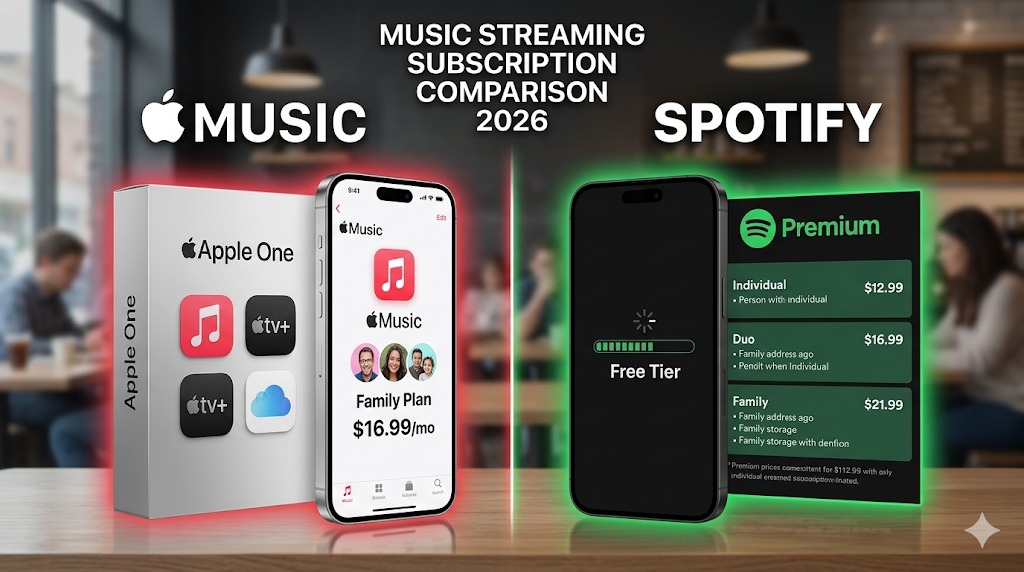
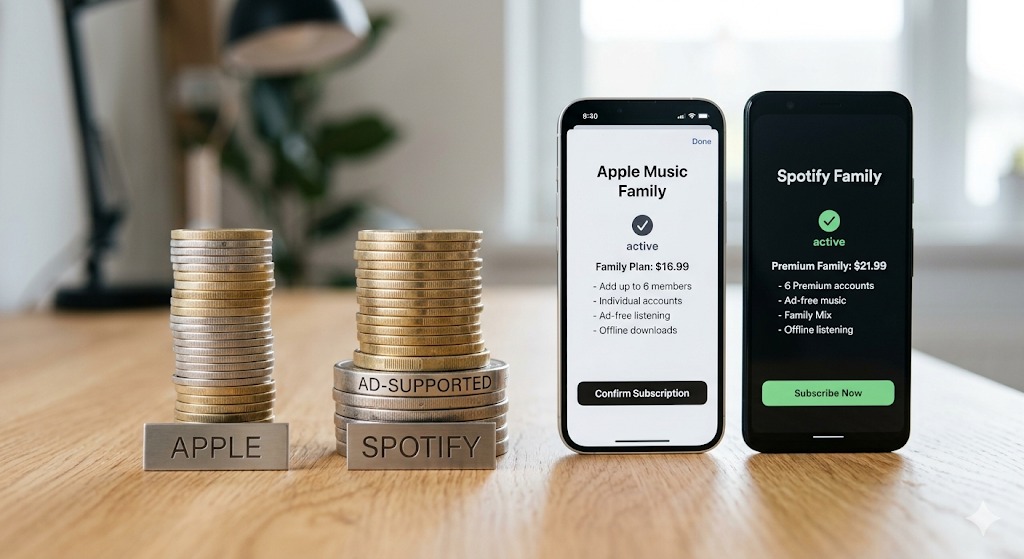
Spotify continues to hold a significant advantage for budget-conscious listeners with its ad-supported free tier. While it comes with limitations—such as shuffled play only on mobile and limited skips—it remains the most accessible entry point into music streaming. Spotify’s Premium plans now range from $12.99 for individuals to $21.99 for a Family plan, which supports up to six accounts.
Apple Music, on the other hand, famously lacks a free tier. However, it often provides better value for those already in the Apple ecosystem. Its Individual plan sits at $10.99, and the Family plan is $16.99. The “Apple One” bundle is a popular SEO keyword choice for users because it combines music, TV+, and iCloud storage for a single discounted price.
| Feature | Spotify | Apple Music |
| Free Tier | Yes (Ad-supported) | No |
| Individual | $12.99/mo | $10.99/mo |
| Family Plan | $21.99/mo | $16.99/mo |
| Student | $6.99/mo | $5.99/mo |
2. Sound Quality: The Audiophile’s Choice
If you are searching for high-resolution audio streaming, the winner used to be clear, but the gap is closing.
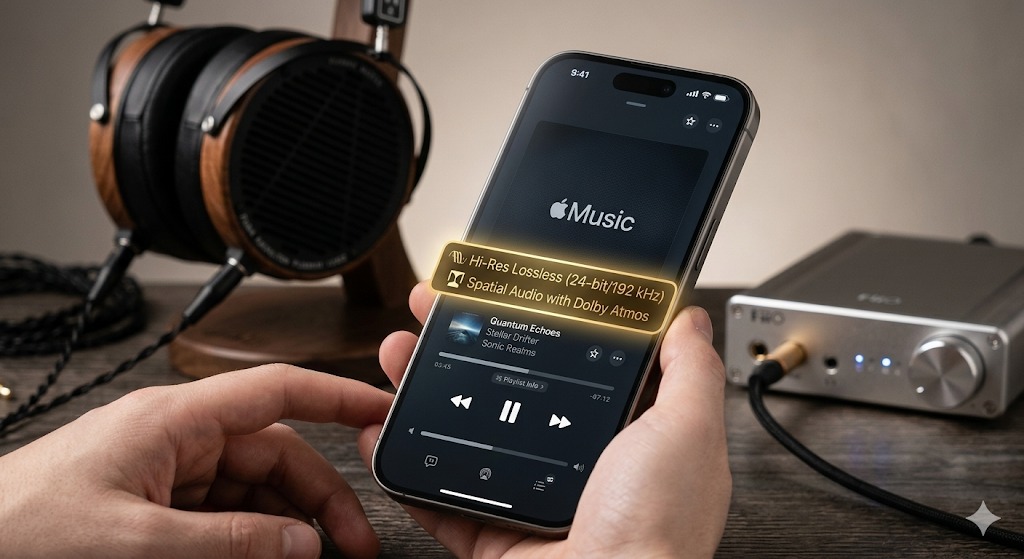
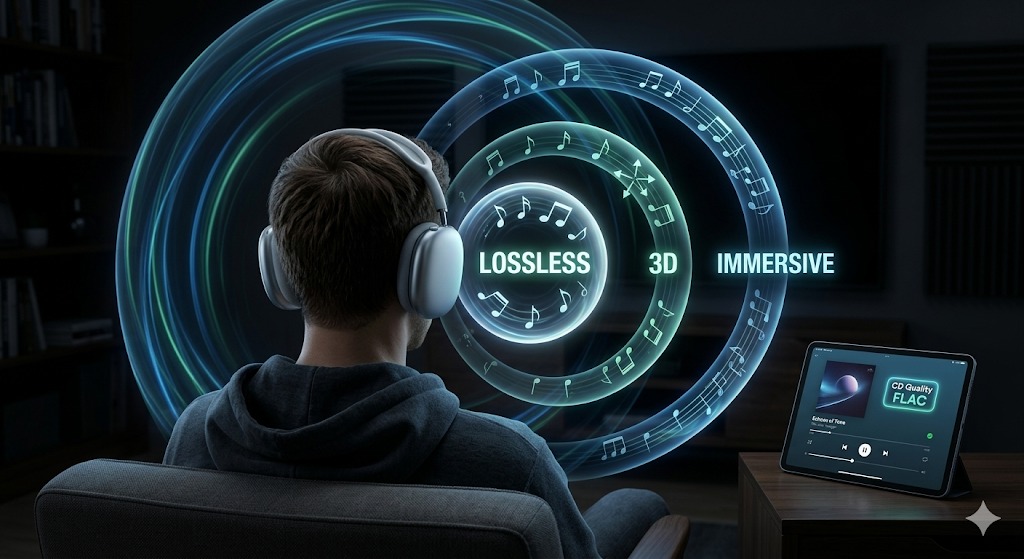
Apple Music has long been the champion of fidelity. Every song in its 100-million-plus catalog is available in Lossless Audio (ALAC) at no extra cost. For those with professional-grade gear, “Hi-Res Lossless” offers resolutions up to 24-bit/192 kHz. Furthermore, Apple’s implementation of Spatial Audio with Dolby Atmos provides an immersive, three-dimensional listening experience that is particularly stunning on AirPods and HomePods.
Spotify finally addressed the “HiFi” elephant in the room with the rollout of its lossless tier in late 2025. While Spotify now offers CD-quality FLAC (24-bit/44.1 kHz), it still trails Apple in terms of maximum resolution and integrated immersive audio technology. For the average listener using Bluetooth headphones, the difference is negligible, but for those with wired setups and DACs, Apple Music remains the gold standard.
3. Music Discovery and Algorithms
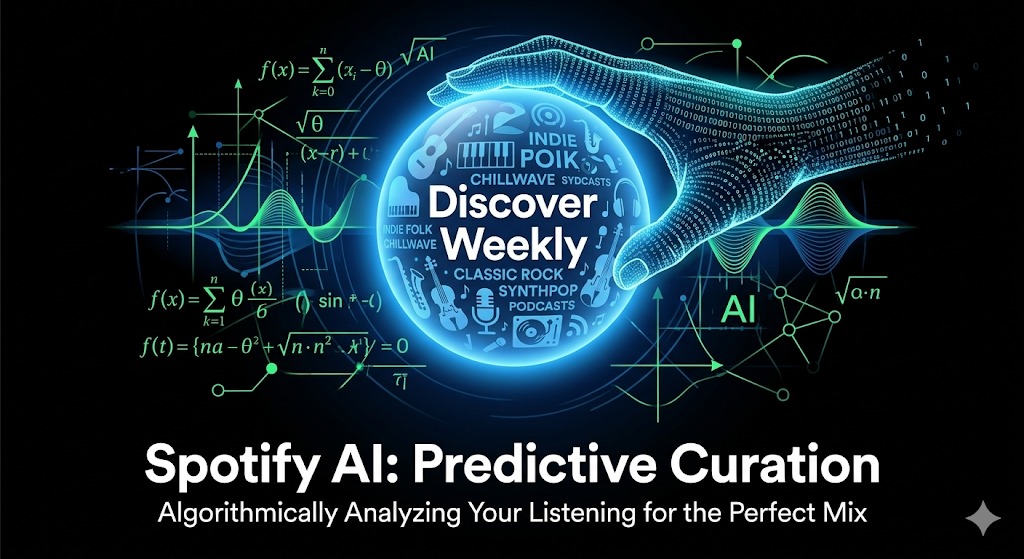
When it comes to personalized music recommendations, Spotify is often cited as the industry leader. Its “Discover Weekly” and “Release Radar” playlists are legendary for their ability to predict a user’s taste with “supernatural” accuracy. In 2026, Spotify has doubled down on AI, introducing the AI DJ and “Niche Mixes” that adapt in real-time to your mood and activity.
Apple Music takes a more “human-centric” approach. While it has improved its algorithmic “Discovery Station,” it relies heavily on world-class editorial curation. If you enjoy listening to live radio, Apple Music 1 offers 24/7 broadcasts hosted by real DJs and artists. Apple users tend to be “album listeners,” whereas Spotify users are often “playlist listeners.”
4. User Interface and Ecosystem Integration
The “Apple Music vs. Spotify” debate often comes down to which device is in your pocket.
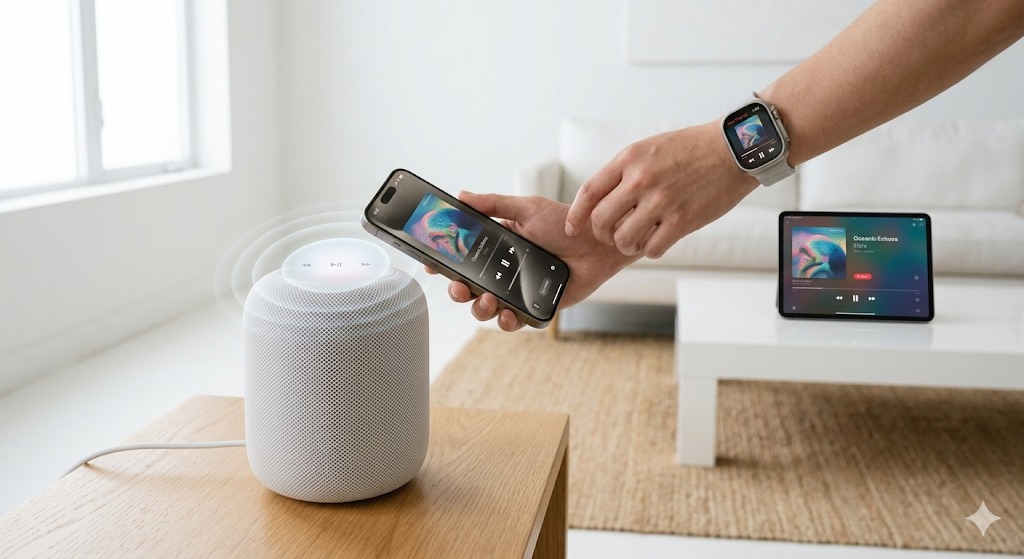
- Apple Music integration: If you own an iPhone, Apple Watch, Mac, and Apple TV, the integration is seamless. You can ask Siri to play any song, and the “Handoff” feature allows you to move audio from your phone to a HomePod with a simple tap. The interface is clean, white (or dark), and focuses heavily on album art.
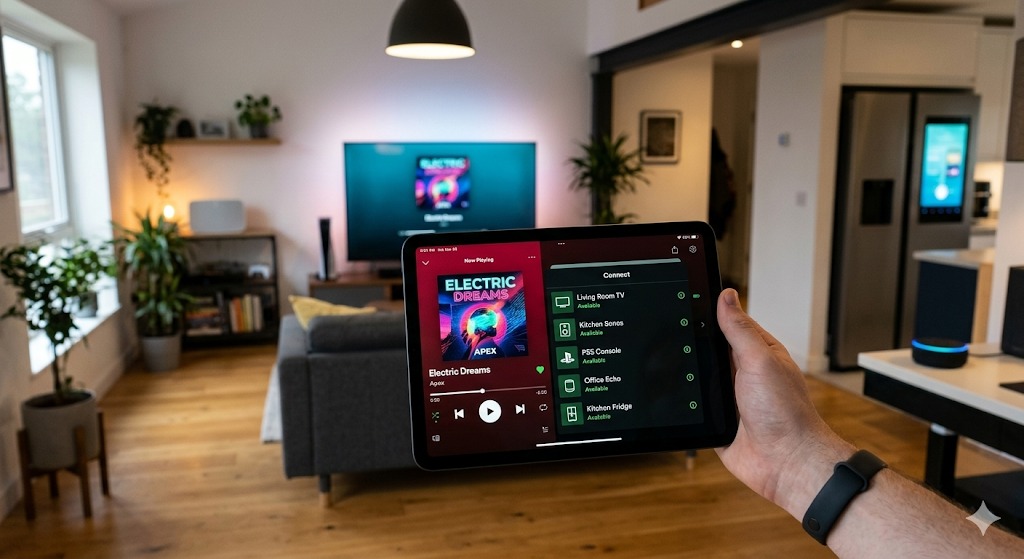
- Spotify Connect: This is Spotify’s secret weapon. Spotify Connect allows you to use your phone as a remote to control music on almost any smart device—speakers, TVs, gaming consoles, or refrigerators—regardless of the brand. Spotify’s UI is generally considered more “social,” making it easier to share songs on Instagram Stories or create collaborative playlists with friends.
5. Library and Content Beyond Music
Both services offer over 100 million songs, so you are unlikely to miss out on your favorite hits. However, their secondary content strategies differ wildly.
Spotify is a “one-stop-shop” for audio. It integrates over 6 million podcast titles and a massive library of audiobooks directly into the main app. If you want your Joe Rogan and your Taylor Swift in the same place, Spotify is the clear choice.
Apple Music keeps things segregated. While it has an incredible Apple Music Classical app (included with the subscription), podcasts are handled by the separate Apple Podcasts app, and books by Apple Books. This makes the Apple Music app feel less cluttered for “purists” who only want to see their music library.
Final Verdict: Which One Should You Choose?
Choose Apple Music if:
- You prioritize sound quality and want Lossless/Spatial Audio.
- You are deeply embedded in the Apple ecosystem.
- You prefer a curated, radio-like experience and album-focused listening.
Choose Spotify if:
- You want the best music discovery algorithms and AI features.
- You need a free version or use a wide variety of non-Apple devices.
- You want podcasts and audiobooks integrated into your music app.
Frequently Asked Questions (FAQ)
1. Can I transfer my playlists from Spotify to Apple Music?
Yes. While neither app has a native “transfer” button, third-party services like SongShift or TuneMyMusic allow you to migrate your entire library and playlists between the two platforms in minutes.
2. Does Apple Music work on Android?
Absolutely. The Apple Music app for Android is highly rated and offers almost all the same features as the iOS version, including Lossless Audio and Spatial Audio (though the latter depends on your hardware).
3. Is Spotify HiFi finally available?
Yes, as of late 2025/early 2026, Spotify has rolled out lossless audio (CD quality) to its Premium subscribers in most regions, though it is still often marketed as a “Music Pro” or “HiFi” add-on in some markets.
4. Which service pays artists more?
Generally, Apple Music has a higher per-stream payout (roughly $0.007–$0.01) compared to Spotify ($0.003–$0.005). This is largely because Apple does not have a free, ad-supported tier which typically lowers the average payout.
5. Can I use Spotify or Apple Music without the internet?
Both services allow Premium/Paid subscribers to download songs, albums, and playlists for offline listening. This is perfect for flights, commutes, or areas with poor cellular reception.